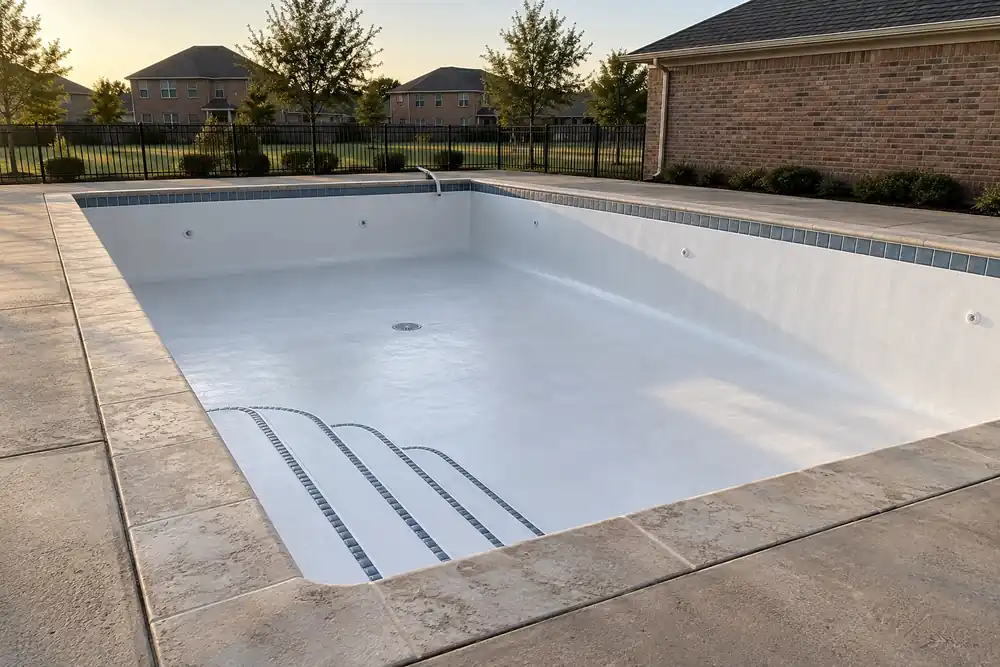
Glass Tile and All-Tile Pool Finishes in Flower Mound, TX
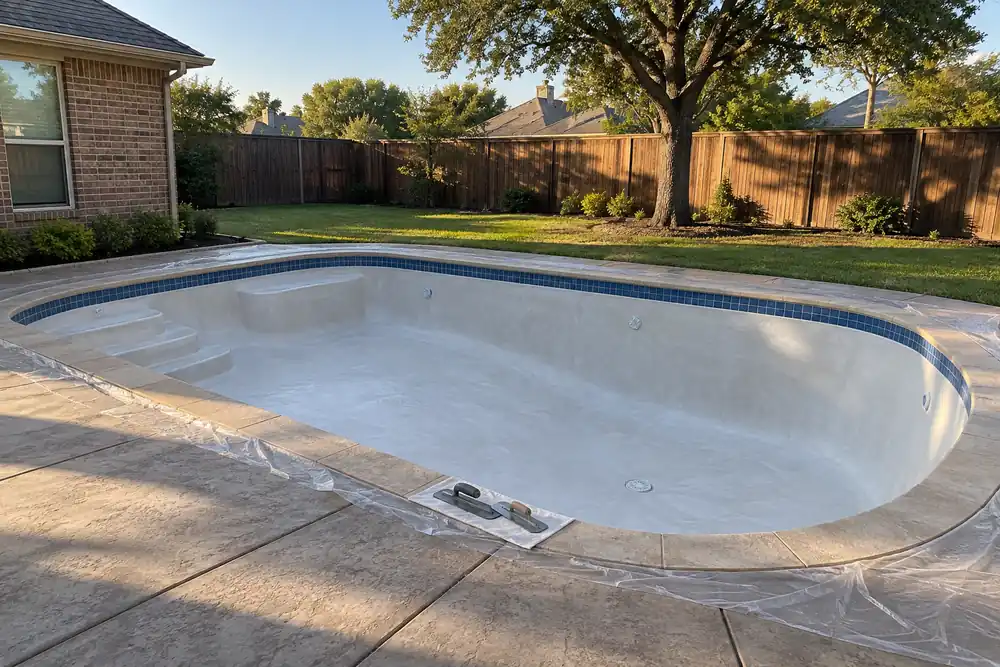
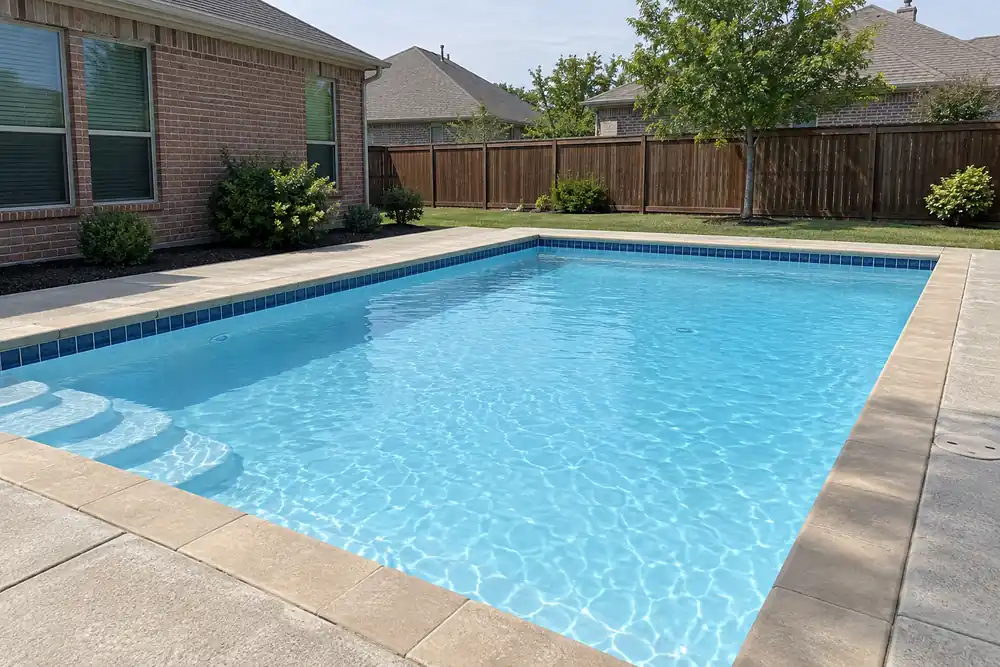
Flower Mound Pool Resurfacing installs glass tile and all-tile pool finishes in Flower Mound, Texas, covering a pool's walls and floor in glass mosaic, porcelain or ceramic tile over a waterproof membrane instead of a cement finish. LATICRETE, a maker of tile-setting materials, says submerged-rated glass tile is very pleasing to look at but typically costs more and takes more installation expertise. Typical 2026 figures for Dallas–Fort Worth price a whole tile interior from $15,000 to $40,000 or more.
Request a free estimate, any time. We'll talk through the tile, the membrane and joints beneath it, and the weeks of curing before the pool is filled.
Call or request a free estimate any time, 24/7
No charge · answered 24/7
Get free estimates
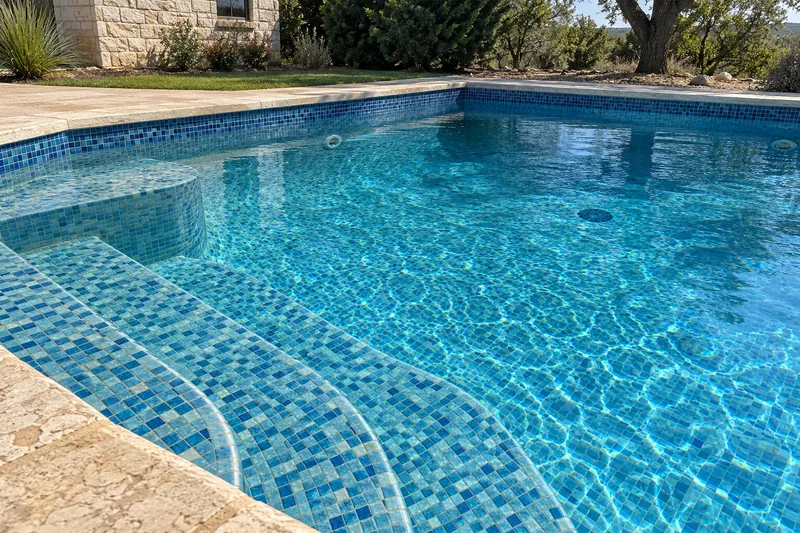
Choosing tile for an all-tile pool
Glass, porcelain or ceramic
By national figures from 2025, tiling the whole interior is the costliest and most labor-intensive way to resurface a pool, with porcelain and ceramic the cheapest tiles and glass the most expensive. Glass tile has its own American National Standard, ANSI A137.2. Lightstreams, a glass tile maker, says variation in surface, color, tone and shading is normal in its cast glass, slight bubbles included. Glass set into a cement finish is covered under polished pool finishes.
Ask the maker first
Lightstreams asks to be consulted before tile is ordered for any all-tile pool, spa or fountain, and requires ANSI and Tile Council of North America standards on every installation. LATICRETE recommends face-mounted glass, on paper or clear plastic, for anything under water, because the glue on back-mounted sheets can absorb water, soften and swell, and the tiles can lose their grip anywhere from several weeks to several years later. Work on the waterline band alone is covered under pool tile repair and replacement.
Ask Flower Mound Pool Resurfacing for a free estimate on an all-tile interior.
Call or request a free estimate any time, 24/7.
(469) 526-3886What goes under the tile
Thin-set mortar and grout aren't waterproof, Lightstreams points out, so submerged tile needs a waterproof membrane system, and glass also needs a movement-joint and crack-isolation system. LATICRETE wants the membrane laid as one continuous pan with no voids. MAPEI's pool specification names the standard for each layer: ANSI A118.10 for the waterproof membrane, ANSI A118.12 for the crack isolation membrane, ANSI A118.4 or better for a cement bond coat, ANSI A118.3 for epoxy grout, and the Tile Council of North America's EJ171 for movement joints. Lightstreams adds that not every ANSI A118.4 polymer thin-set suits glass, and some discolor over time.
Cure times between layers
LATICRETE says a concrete shell must cure for at least 28 days, with time allowed between each stage of the work. Lightstreams lists the industry minimums layer by layer: shotcrete or gunite 28 days, the primary waterproofing 1 to 7 days depending on the product, a mortar bed 7 days, the secondary waterproofing that glass tile requires 1 day, and 21 days after grouting before the pool is filled.
Call or request a free estimate any time, 24/7.
(469) 526-3886How a glass tile interior is set
A test panel and a flat bed
Lightstreams strongly recommends a test panel before the full installation. Its steps comb thin-set with a 3/16-by-1/4-inch V-notch trowel, then flatten the ridges into a smooth bed about 3/32 to 1/8 inch deep, since gaps, bubbles or lines show through translucent tile. Every sheet is back-buttered in submerged or translucent work, because some thin-sets shrink as they cure and leave voids that discolor the tile and can lead to delamination and mold. LATICRETE wants 95 to 100 percent adhesive coverage on both the tile back and the wall.
Sun, tape and grout
Transparent glass lets direct sun through to the thin-set and can heat it significantly as it cures, so Lightstreams has every tiled area shielded from sun and wind with tarps, screens or umbrellas. The clear face tape comes off after 6 to 12 hours, grouting waits at least 24 hours, and the glass faces are cleaned only with a nylon brush, a blue nylon scrub pad, a soft sponge and warm water.
Movement joints
Lightstreams follows the Tile Council of North America's movement-joint design: a flexible, neutral-cure, pool-grade silicone between the waterline tile and the coping or concrete deck, joints no more than 8 feet apart on spa overflows and vanishing edges, and a joint at every inside corner where the plane changes. LATICRETE spaces joints every 8 to 12 feet in each direction across a tiled pool, on top of any joints carried up from the shell.
The wait before the water
MAPEI sets the cure before filling by product: 21 days for its Adesilex P10 glass tile mortar with Keraply, three days for Ultraflex LFT Rapid, 28 for Ultraflex LFT and 14 for Kerapoxy CQ epoxy. Then the fill goes slowly: LATICRETE fills a tiled pool at 2 feet per 24 hours and holds off when very cold water would meet a sun-heated shell, and MAPEI's specification allows 24 to 30 inches a day and raises heated water no faster than about 2°F an hour. If the pool is ever emptied, LATICRETE lowers it no faster than 2 feet per 24 hours, so water pressure can't loosen tile or leveling mortar.
Call or request a free estimate any time, 24/7.
(469) 526-3886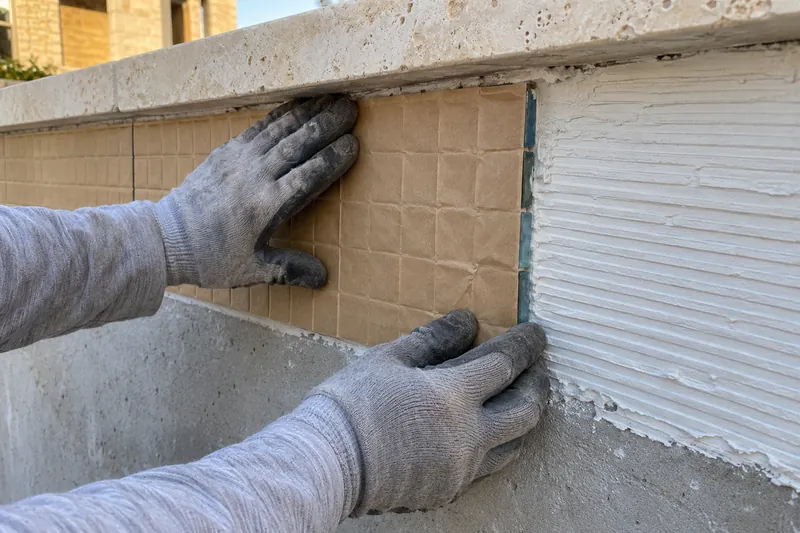
Tiled pools in Flower Mound's sun and water
Lightstreams' shading rule counts for a lot where Grapevine Dam, NOAA's nearest full station, averages 104.3 days a year at 90°F or hotter in its 1991–2020 normals. Once the pool is full, LATICRETE keeps tiled-pool water at pH 7.2 to 8.0 and warns that calcium hardness below 200 to 250 ppm lets the water draw calcium out of cement grout and mortar. Flower Mound's 2025 water quality report doesn't print hardness, but the Town sends monthly test results on request. LATICRETE also uses only neutral-pH cleaners on its grouts, and keeps a tiled pool closed for a season partly full to protect the tile bond.
On permits, the 2024 International Swimming Pool and Spa Code the Town adopted says no permit is required for replastering or resurfacing an existing pool or spa, while the Town's own amendments require one to alter or repair a pool; ask Building Inspections which of the two applies to a full retile before work starts.
Westlake, where the median home value sits above $2,000,000, the top of the Census scale, in 2020–2024 survey estimates, has its own page on glass tile pool finishes in Westlake. Where the coping, steps or features change too, the tile becomes one part of pool remodeling. Flower Mound Pool Resurfacing will check the shade, the fill water and the permit question when your pool is measured.
Call or request a free estimate any time, 24/7.
(469) 526-3886Glass tile and all-tile pool costs
- Tile interior (DFW, 2026)
- $15,000–$40,000+
- Tile finish (Dallas, 2025)
- $15,000 and up
- Tile, per sq ft of surface, average (Dallas, 2026)
- about $26; $36+ high-end
- Glass tile, per sq ft (Dallas, 2026)
- $1–$36
- Tile resurfacing (national, 2026)
- $20,000–$50,000+
Published Dallas–Fort Worth, Dallas and national figures, not our prices. A tile interior is priced after the pool is measured.
National figures from 2025 put pool tile installation at $15,000 on average, from $2,000 to $70,000 depending on the pool's size and the tile, or $4 to $30 or more a square foot. The Dallas figure of $15,000 and up turns on design complexity.
Call or request a free estimate any time, 24/7.
(469) 526-3886Glass tile pool questions and answers
Are glass tiles good for swimming pools?
Yes, when the tile is rated for submerged use and installed to the makers' standards. Lightstreams says only experienced professional tile installers who know its procedures should set its glass, and LATICRETE notes that glass costs more than other pool tile. Flower Mound Pool Resurfacing can talk through the tile and the setting system for your pool.
What are the disadvantages of glass tiles?
Cost and the demands of the installation. Glass is the most expensive pool tile by national figures from 2025, and it needs a waterproof membrane, a crack-isolation system, back-buttered sheets and shade while the thin-set cures. Glass is also more prone to fracturing, cracking and chipping than porcelain, so spare tiles are worth keeping.
What are the common problems associated with glass pool tile?
Most start behind the tile. Thin-set that shrinks as it cures can leave voids that discolor the glass and lead to delamination and mold; LATICRETE warns that translucent glass can show shadowing, which it calls ghosting, when the maker's instructions aren't followed; and back-mounting glues can soften under water and let go.
How long do tiled pools last?
A tile interior has the longest life of any finish in national figures for 2026, and typical Dallas–Fort Worth figures from that year expect it to last 25 years or more. No tile, mortar or grout maker states a lifespan in years for a glass tile interior.
What type of tile is best for a pool?
Tile that takes on very little water. LATICRETE's pool guide accepts impervious tile, below 0.5 percent water absorption, or vitreous tile, below 3.0 percent, because tile that absorbs more may expand permanently from moisture. Within that, porcelain and ceramic cost least and glass most, and glass meant for submerged use should come face-mounted.
Get a free glass tile pool estimate
Flower Mound Pool Resurfacing answers calls and estimate requests 24/7. Tell us about the pool, the tile you have in mind and whether the coping or steps are changing too.