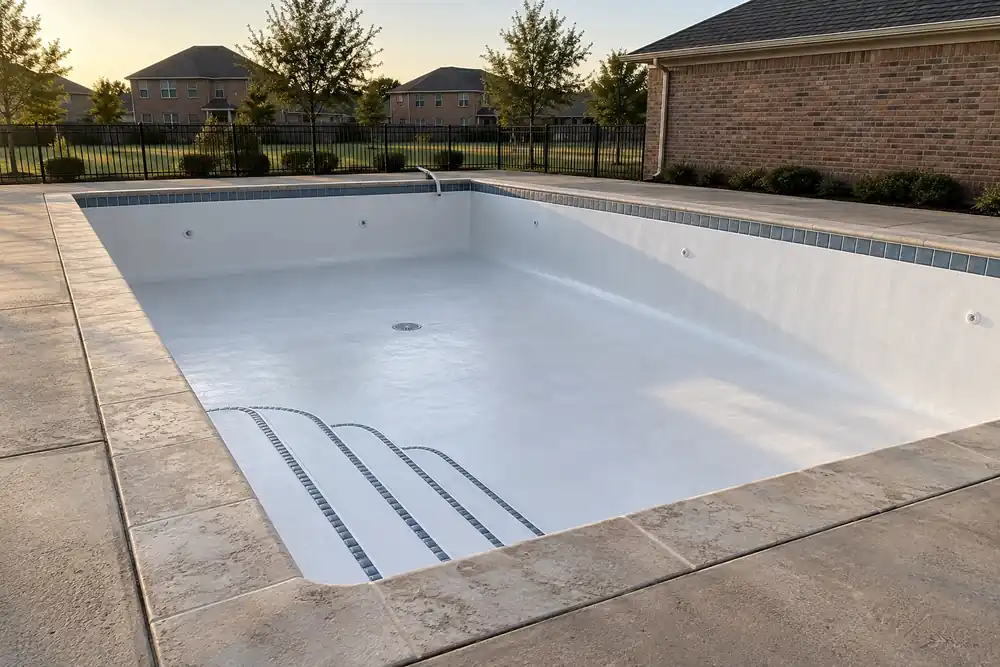
Flower Mound Pool Resurfacing: Remodeling, Pebble and Quartz Finishes, Replastering, Commercial & Residential
Serving Flower Mound, Texas
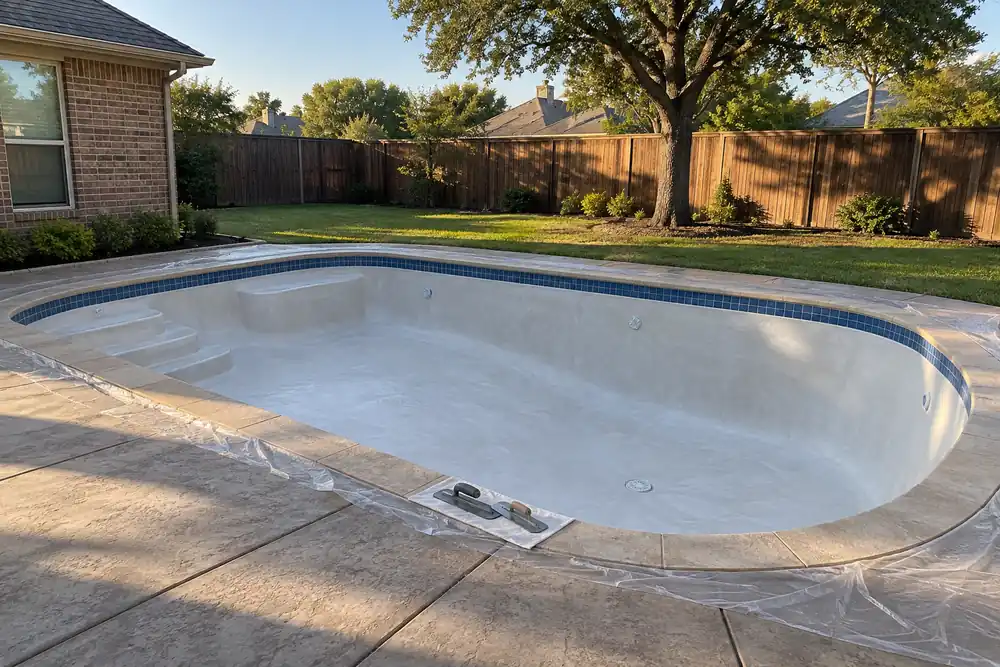
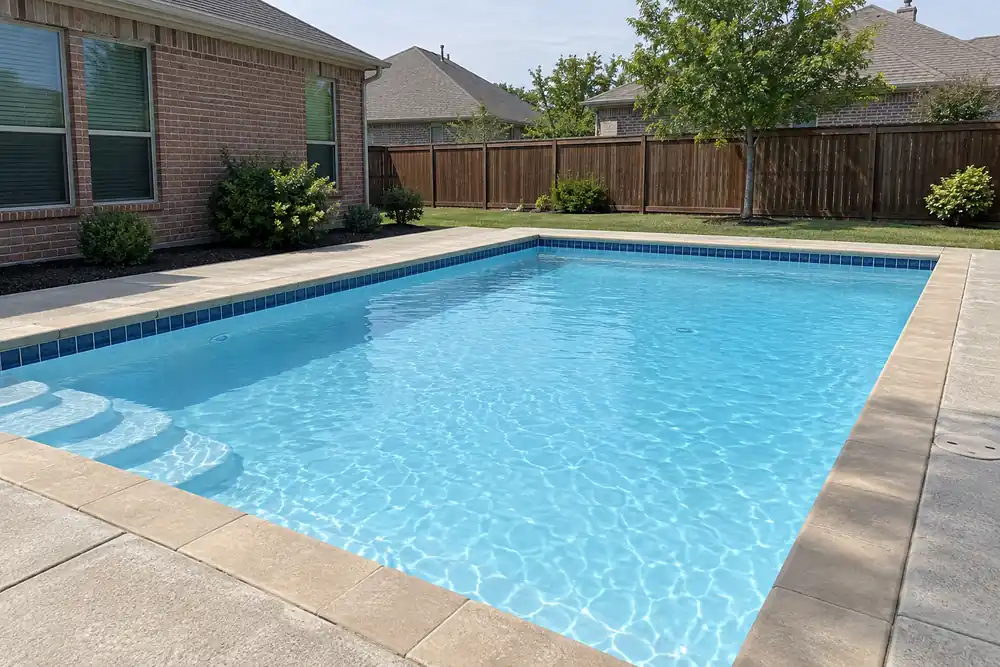
Flower Mound Pool Resurfacing is a commercial and residential pool resurfacing contractor in Flower Mound, Texas. We resurface HOA, apartment and other commercial pools, remodel and renovate backyard pools, refinish pools in pebble, quartz and polished finishes, and replaster them in white or colored plaster. We also refinish fiberglass pools, resurface pool decks, replace waterline tile and coping, and repair plaster, cracks, leaks and skimmers. The median Flower Mound home was built in 1997, and 40.3% of the town's homes date from the 1990s, according to the Census Bureau's 2020–2024 American Community Survey; the National Plasterers Council rates traditional white plaster as a 5 to 8 year surface.
Flower Mound's tap water is surface water from lakes and rivers, Lewisville and Grapevine lakes among them, bought from the Upper Trinity Regional Water District and Dallas Water Utilities. The Town's 2025 water quality report doesn't print the water's calcium hardness, and the National Plasterers Council says testing fill water should no longer be optional, so we'll talk through the finish, the fill and the 28-day start-up along with the price. Estimates are free, and calls and estimate requests are answered 24/7.
Call or request a free estimate any time, 24/7
No charge · answered 24/7
Get free estimates
Why homeowners and HOAs call Flower Mound Pool Resurfacing for replastering and remodels
What to expect when you ask about a replaster, a new finish, a remodel or a community pool.
Free estimates before anything is booked
Tell us the pool's size, its finish now and what you'd like changed. The estimate costs nothing, and nothing is booked until you decide.
Calls and estimate requests answered 24/7
Calls and estimate requests are answered around the clock, weekends included.
Backyard, HOA and commercial pools
Replasters, finishes and remodels for homeowners; resurfacing, decks and tile for HOA, apartment and hotel pools, which Texas rules count as Class C public pools even though they aren't open to the general public.
The 28-day finish start-up, planned with the price
The National Plasterers Council says a new finish is especially open to staining, scaling and discoloration in its first 28 days. Before a price is set, we'll talk through which finish suits the pool and what that start-up involves.
Town permits and HOA review, explained
The Town adopted the 2024 International Swimming Pool and Spa Code in 2025, and 69.7% of its residential lots sit in subdivisions its records mark with HOA requirements. We'll talk through what to confirm with Building Inspections and your HOA before the pool is drained.
Pool finish specs and prices with their sources
Specs, rules and prices on this site name their source: the National Plasterers Council, the finish makers, the Town of Flower Mound, the Census Bureau. Prices are typical Dallas–Fort Worth or national figures, not quotes.
Call or request a free estimate any time, 24/7.
(469) 526-3886Commercial, HOA and apartment pool resurfacing
Under the Texas Department of State Health Services rules, a pool run for an apartment complex, condominium, hotel, property owners association or club is a Class C public pool. Flower Mound adds its own public-pool article, which covers every non-residential pool in town whenever it was built; such a pool needs a Town operating health permit, and one closed for 30 days or longer needs a new pre-opening inspection before it reopens.
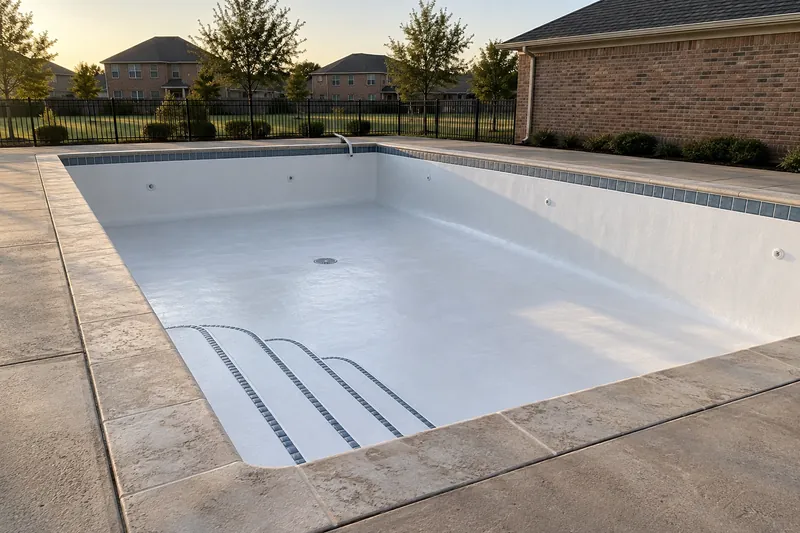
Commercial pool resurfacing
Texas adopts the 2021 International Swimming Pool and Spa Code for the alteration, renovation and repair of commercial pools, and lets a minor repair follow the construction standard in place when the pool was built. While a public pool is closed for renovation, the state rules keep swimmers out of the pool yard and call for a closed sign on the entry gates.
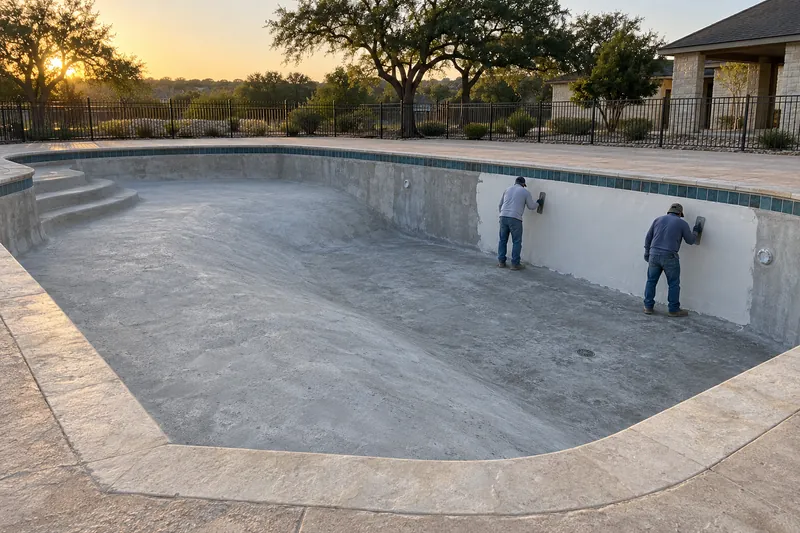
HOA and community pool resurfacing
Wellington of Flower Mound's amenities include two junior Olympic-size pools and a tot pool, and Canyon Falls has two swimming pools; the Town's subdivision records also flag HOA pools at Bristol Place at Bridlewood, Stone Hill Farms and the Villages of Northshore. Texas requires an HOA to inspect its pool yard enclosures and gates at least once every 31 days, and every Class C pool runs under a certified operator.
Commercial pool remodeling
The Justice Department says a community pool limited to residents and their guests isn't covered by the ADA's accessibility rules, but one opened to the public for rental or use is. The CDC's Model Aquatic Health Code calls work costing more than half a pool's replacement cost a substantial alteration, whose plans go to the authority having jurisdiction before work starts.
Call or request a free estimate any time, 24/7.
(469) 526-3886Pool remodeling, renovation and additions
Flower Mound's amended pool code has anyone who intends to alter, repair or enlarge a pool or spa apply to the code official for permits before the work, and the Town files a job with several outdoor projects as one Umbrella permit. Pebble Technology International notes that in a remodel, the finish and the waterline tile are usually done at the same time.
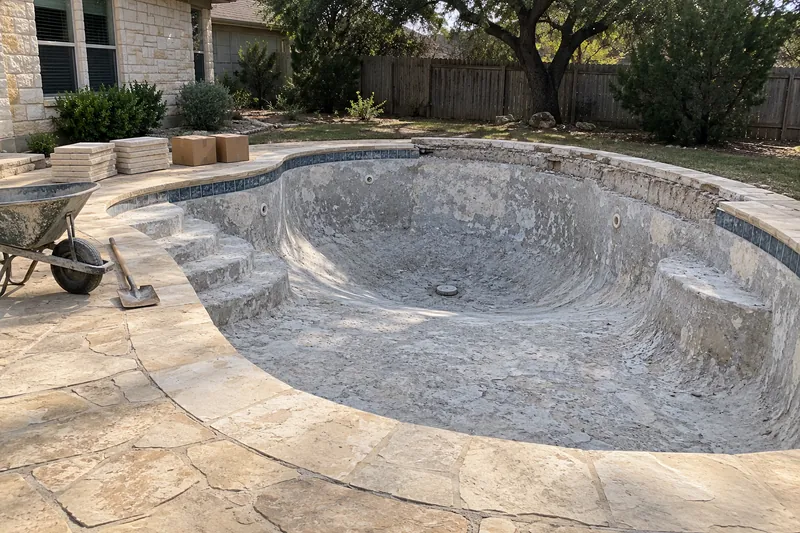
Full pool remodels
Pool remodeling and renovation can renew the interior finish, waterline tile, coping and deck in one drain-down, or change the pool itself. Pebble Technology International says a pool project can take a week or much longer, depending on its scope.
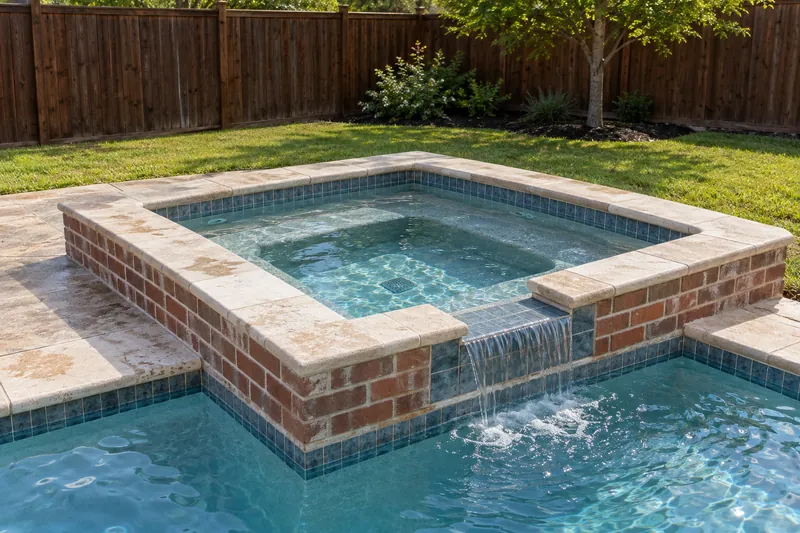
Adding a spa to an existing pool
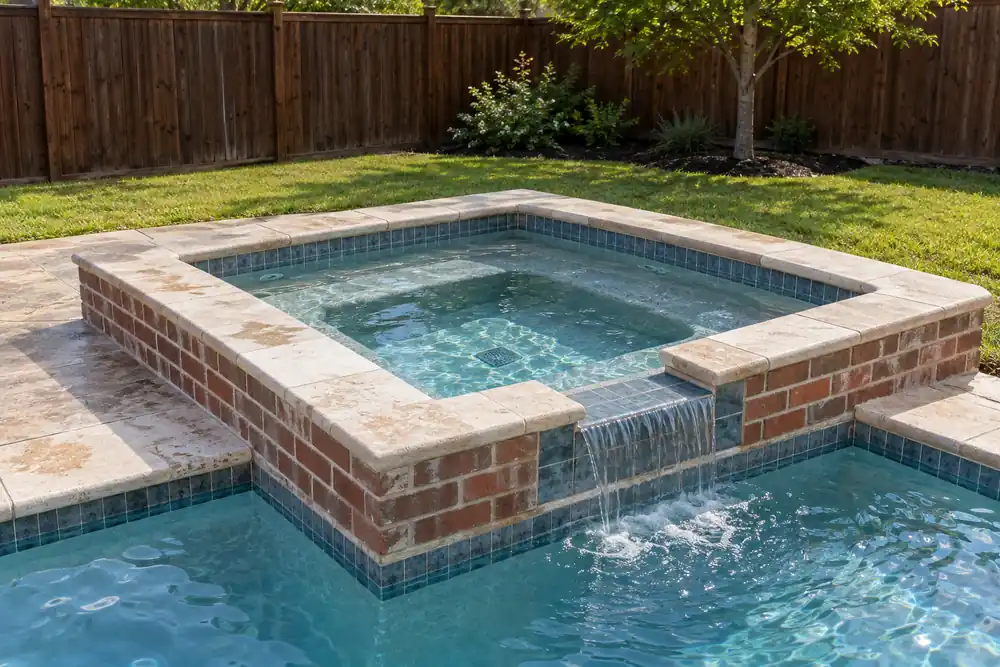
Hot tubs and spas need a Town permit. The model code holds a spa's water to 4 feet deep from the design waterline and any seat to 28 inches, and calls for one skimmer per 150 square feet of spa surface where skimmers are the only overflow.
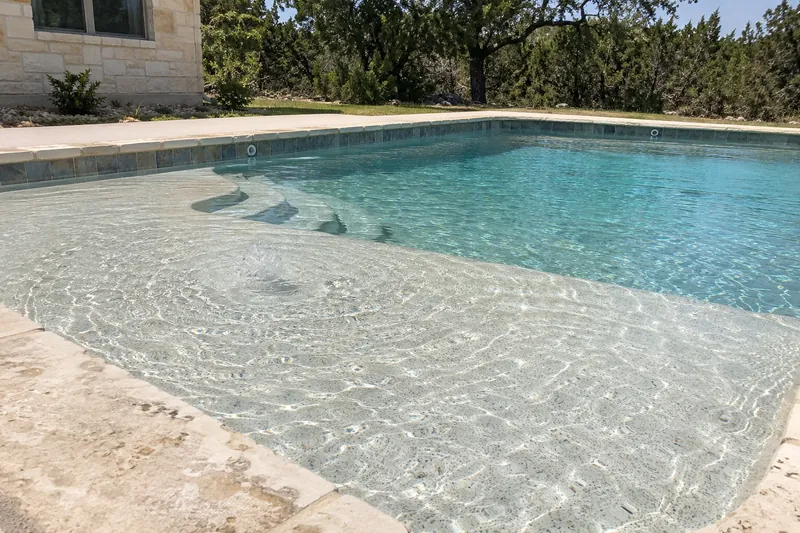
Tanning ledges, steps and benches
A tanning ledge or sun shelf is typically 6 to 9 inches deep, according to Ledge Lounger, a maker of in-pool furniture. Pentair sets its ColorVision bubblers in water 2 to 12 inches deep, at least 3 feet from walls and other bubblers.
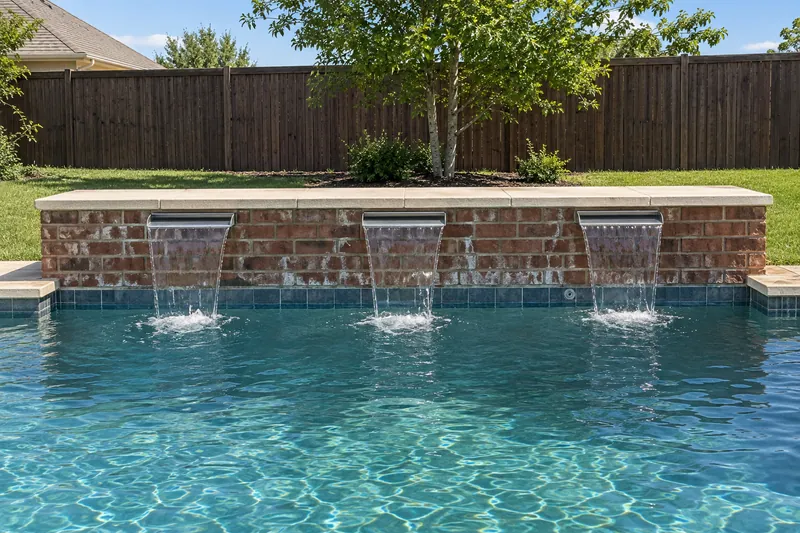
Water features and waterfalls
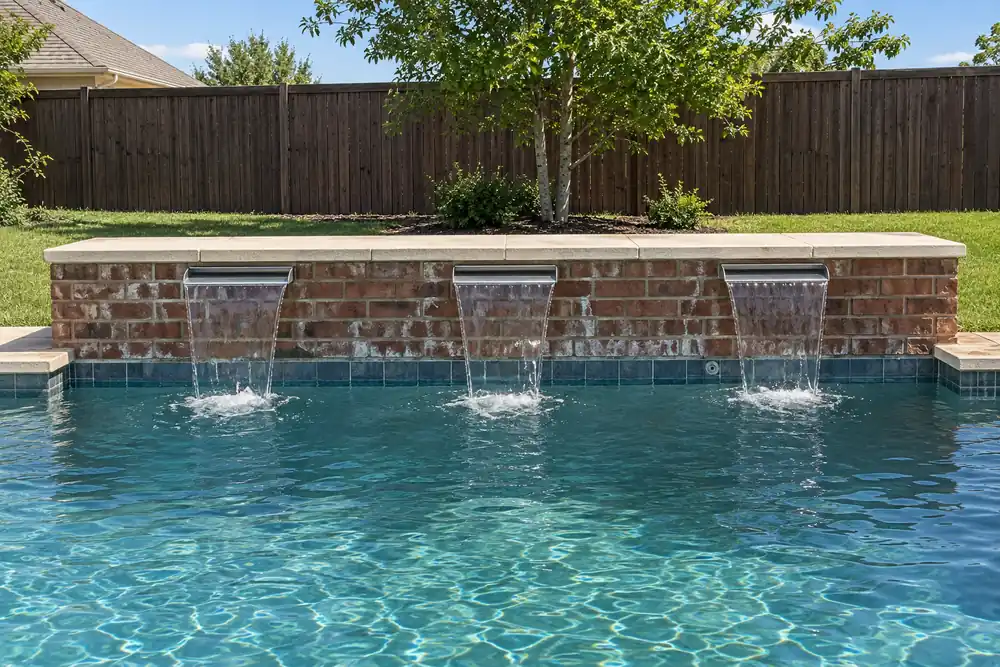
Pentair recommends mounting a sheet waterfall no more than 3 feet above the water, because higher sheets break apart and buffet, and plans about 15 gallons a minute for each foot of waterfall.
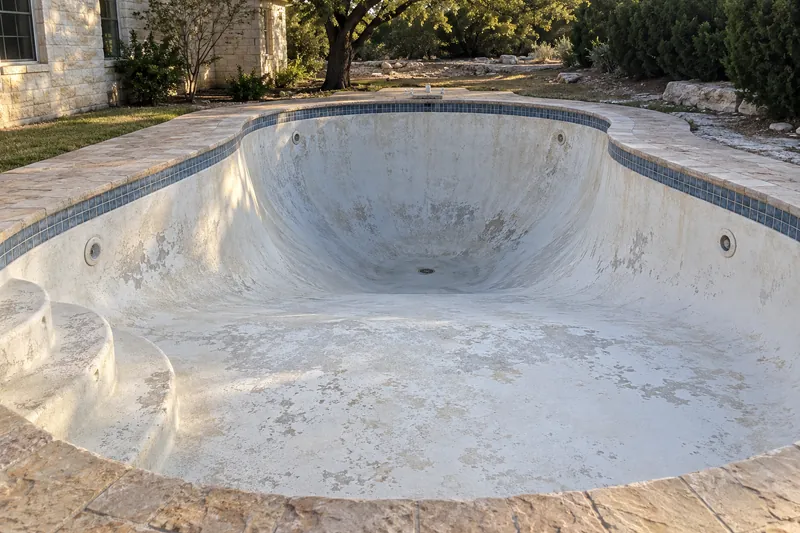
Diving pool conversions
The International Swimming Pool and Spa Code classes a nondiving residential pool as Type O and bars diving equipment on one. The Town holds diving water envelopes to the code's table or the board maker's figures, whichever is greater.
Call or request a free estimate any time, 24/7.
(469) 526-3886Pebble, quartz, plaster and tile pool finishes
The National Plasterers Council says a pool finish is a special cement mix made for pools, placed and finished in one single application, and that the finish chosen at the planning stage has a big effect on how well a pool keeps its looks.
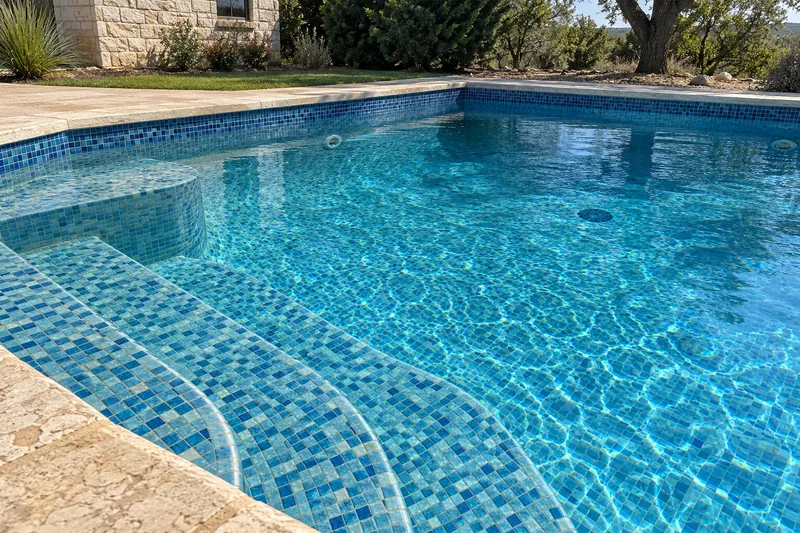
Glass tile and all-tile interiors
LATICRETE, a maker of tile-setting materials, says glass tile suited to submerged use is typically more expensive and takes more installation experience, and it allows only impervious tile (under 0.5% water absorption) or vitreous tile (under 3.0%) in pools.
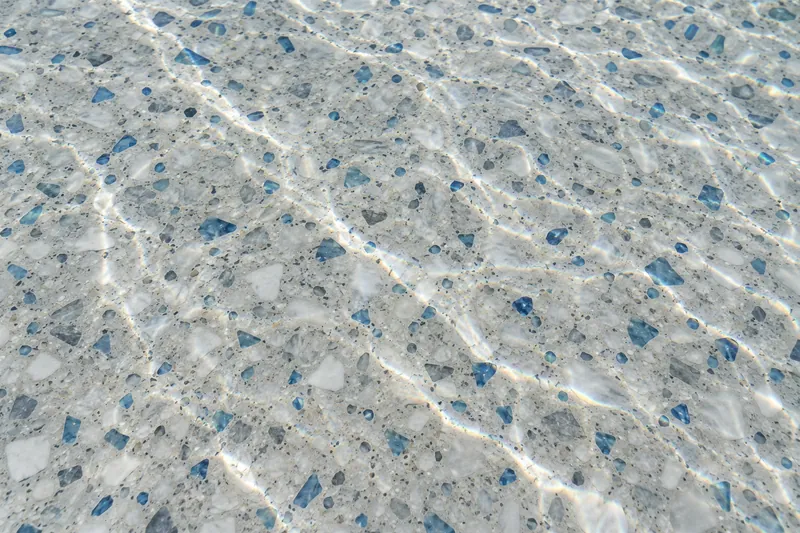
Polished and glass bead finishes
Polished finishes are smooth but look like exposed aggregate: polishing, the last finishing step, reveals a mix of aggregate sizes and colors. SGM's Durazzo is polished with diamond disks after it goes on, for an ultra-smooth, glass-like surface.
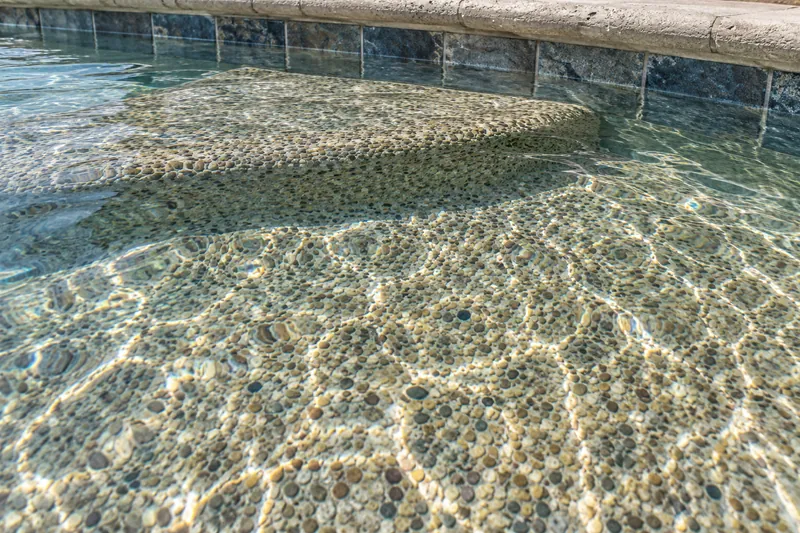
Pebble finishes
The National Plasterers Council calls pebble pool finishes the most durable surface available, because river pebble is chemically inert, though they are slightly more textured and cost more. Pebble Technology International has made them since 1987.
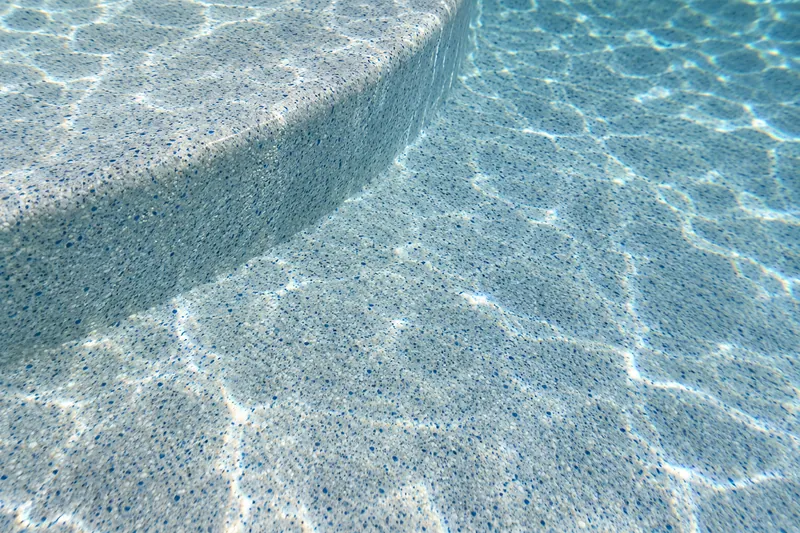
Quartz finishes
Quartz is one of nature's hardest minerals and doesn't react with pool chemicals, the Council says. SGM makes its Diamond Brite quartz finish in Florida and in Dallas, and checks every batch of about 60 to 80 bags before it ships.
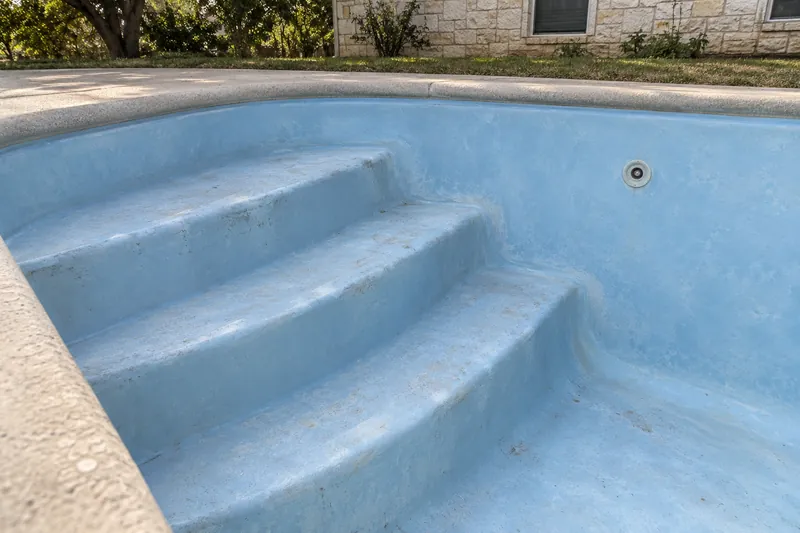
Fiberglass pool refinishing
Gelcoat is the colored resin layer you see and touch inside a fiberglass pool. River Pools, a fiberglass pool maker, says a fiberglass pool is usually 20 or 30 years old before it shows a need for refinishing.
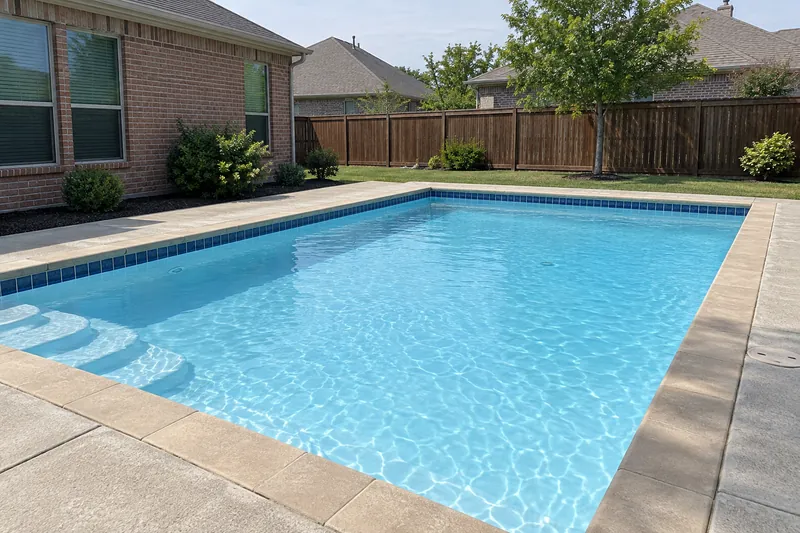
White and colored plaster
White plaster is white cement, white marble aggregate and water: the most affordable finish, with a brilliant, light blue look underwater. Pool replastering in colored plaster brings out mottling and streaks, which the Council doesn't count as defects.
Two smaller finish jobs round out the list: pool painting, where Olympic pool coatings give epoxy paint a 5 to 8 year service life and acrylic enamel 2 to 3, and spa resurfacing, where the Pool & Hot Tub Alliance says a spa should be drained once its dissolved solids run 1,500 ppm above the source water's.
Call or request a free estimate any time, 24/7.
(469) 526-3886Pool deck resurfacing, travertine, stamped concrete and repair
The International Swimming Pool and Spa Code limits a non-wood pool deck's slope to 1/2 inch per foot and wants no more than 1/8 inch of water standing 20 minutes after water stops being added. The Town's swimming pool packet sets a new pool's concrete deck at least 3½ inches thick, with 3/8-inch rebar no more than 18 inches apart.
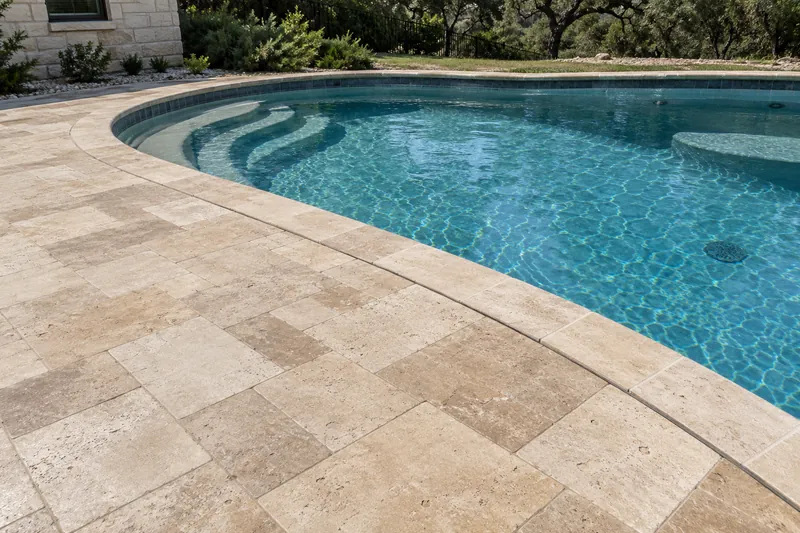
Travertine and paver pool decks
The Natural Stone Institute groups travertine with limestone and marble as calcium-carbonate stones that acids can dull or etch, so mild non-acidic cleaners suit them. The holes in true travertine are filled during fabrication or left open.
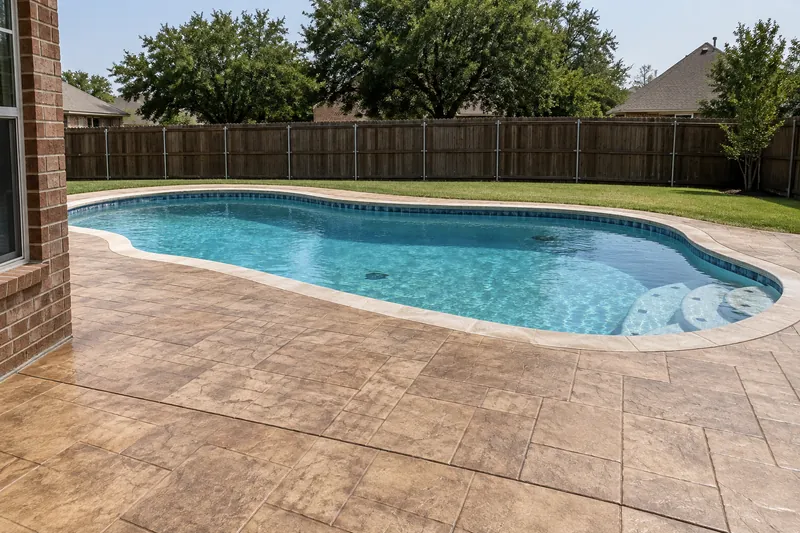
Stamped concrete pool decks
Stamping presses patterns into wet concrete, or into a special coating, to look like stone, brick or tile. Brickform, a stamped-concrete materials maker, lists pool decks among its uses.
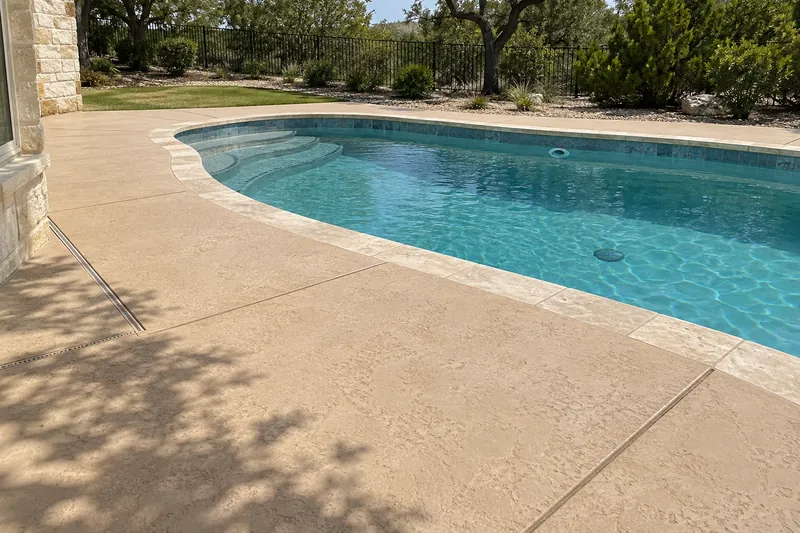
Pool deck resurfacing and coatings
SUNDEK describes its acrylic deck coating as about as thick as two stacked quarters, put down in 4 to 8 layers over 2 to 8 clear, dry days. Spray-texture coatings are knocked down with a trowel for a slip-resistant texture, then finished with two acrylic color coats.
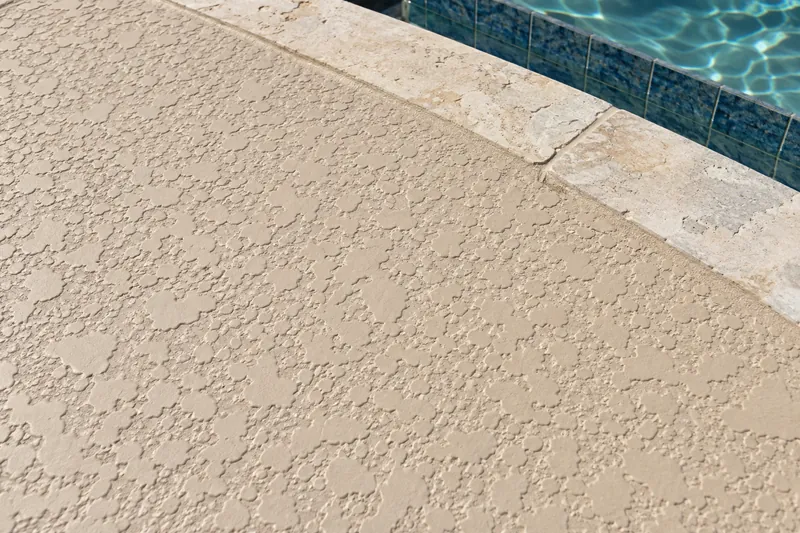
Cool deck repair
Mortex invented Kool Deck in 1962 as a topping for pool decks and says it significantly lowers the surface temperature of concrete. It also warns that painting over Kool Deck makes the painted area hotter and slicker.
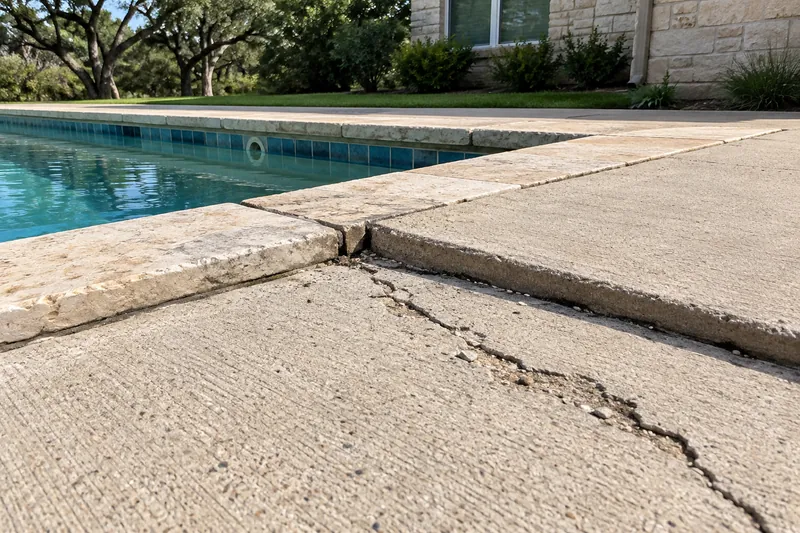
Pool deck repair
The National Ready Mixed Concrete Association says concrete cracks where design and construction don't allow for its movement with moisture and temperature, and spaces contraction joints no more than 24 to 36 times the slab's thickness apart.
Call or request a free estimate any time, 24/7.
(469) 526-3886Waterline tile, coping and expansion joint repair
One Dallas–Fort Worth tile contractor's 2026 guide says most of its retiles are on pools 15 to 25 years old, and that tile and coping usually wear out around the same age.
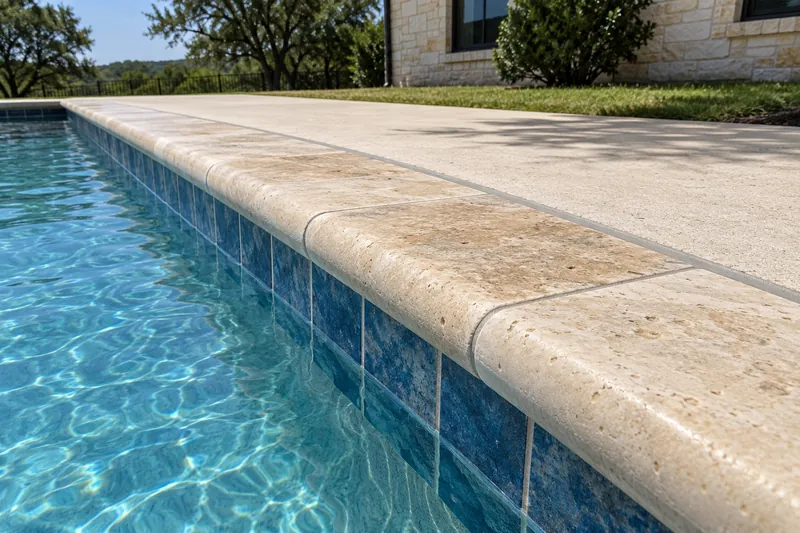
Pool coping repair and replacement
Coping is the edge between the pool shell and the deck; Eco Outdoor USA, a stone maker, says it is designed to stop water getting behind the shell. Unilock and Belgard disagree on the overhang, about 2 inches against 1, and on whether coping slopes away from the pool.
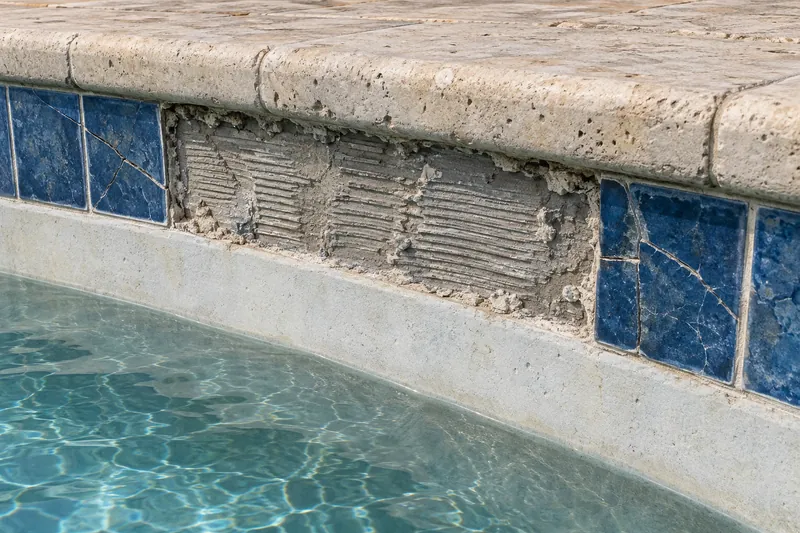
Waterline tile repair and replacement
Tile sits at the waterline because deposits clean off it fairly easily and it holds up in and out of the water through constant wet and dry cycles. LATICRETE calls for mortars rated for continuous submersion.
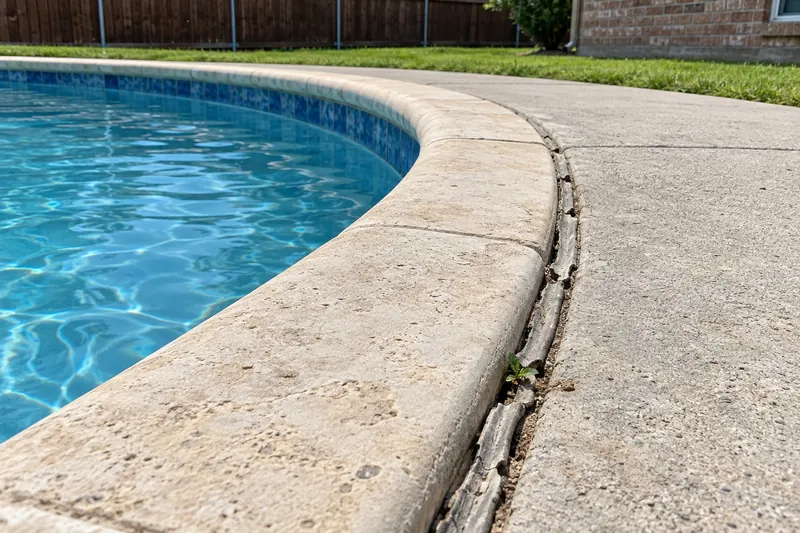
Mastic and expansion joints
The code requires the joint where coping meets a concrete deck to be watertight and to protect the coping and its mortar bed from the deck's movement. Without it, the deck's expansion presses on the shell and can crack or dislodge coping and tile.
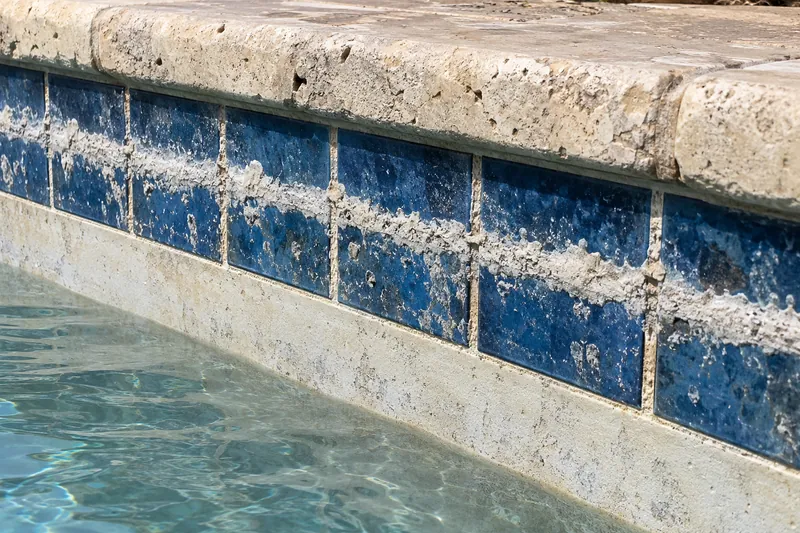
Tile cleaning and calcium removal
The National Plasterers Council names calcium carbonate as a major part of scale. Orenda, a pool chemical maker, says the evaporation line on tile is a common place for it, because water evaporates and leaves its calcium behind.
Call or request a free estimate any time, 24/7.
(469) 526-3886How a pool resurfacing job runs, step by step
A free estimate and the finish choice
We look at the pool’s size, its finish now and what you want changed, then talk through plaster, quartz, pebble or tile against your budget. The estimate is free.
Permits, HOA approval and the water stage
The 2024 International Swimming Pool and Spa Code the Town adopted says a permit isn’t required to replaster or resurface an existing pool, but the Town’s own amendments require permits to alter or repair one, and spas, electrical and plumbing work need permits too. Confirm with Building Inspections and your HOA, and check the Town’s current water restrictions, before the drain-down.
Draining and preparing the old surface
The National Plasterers Council warns that draining always risks the finish, and the Pool & Hot Tub Alliance says to check the hydrostatic relief valves first. Hollow plaster is sounded out and cut away, the shell is cleaned and bond-coated or stripped, and the old plaster is undercut 2 inches back from tile and fittings.
Tile and coping while the pool is empty
Pebble Technology International says the finish and waterline tile are usually done in the same project. The tile and coping go in first, and its specification cuts the new finish back at least 1/2 inch where it meets them.
The finish, in one application
The finish is placed and finished in a single application, averaging 3/8 to 3/4 inch thick under the Council’s tolerances, on a shell that SGM says should be cool and damp but not dripping.
An unbroken fill and the 28-day start-up
Once the fill starts it runs without stopping to the middle of the skimmer, which NPT says can take 18 to 36 hours. The Council’s start-up then brushes the whole pool at least twice a day and tests and adjusts the water daily through day 28.
Call or request a free estimate any time, 24/7.
(469) 526-3886Pool finishes compared: plaster, quartz, pebble and tile
Surface life by finish
The National Plasterers Council rates each finish's surface life. Its figures are the only ones from an industry body; every other year figure is a maker's own claim.
Color, water tone and heat
CL Industries says the finish's base color decides the water's color more than anything else: white, blue, black or gray finishes give blue water, while green, brown or tan give green water. SGM adds that light finishes keep water cooler and dark ones absorb and hold heat, and NPT notes that shade from trees or buildings makes the water look darker.
Finish makers' surface-life claims
Pebble Technology International says plaster needs resurfacing every 5 to 10 years, quartz lasts around 7 to 15, and a properly installed pebble finish over 20. Universal White Cement, which makes white cement, says good materials, sound application and decent water care should routinely give white cement plaster 15 to 20 years. SGM, which makes a quartz finish, says pebble's texture hides minor staining better than smoother, lighter quartz.
Call or request a free estimate any time, 24/7.
(469) 526-3886How much does pool resurfacing cost in Flower Mound?
- White plaster, 15,000–25,000-gallon pool
- $4,000–$7,000
- Colored or tinted plaster
- $5,000–$8,000
- Quartz plaster
- $6,500–$10,000
- Pebble finish
- $8,000–$15,000
- Glass bead finish
- $10,000–$18,000
- Tile interior
- $15,000–$40,000+
- Full waterline tile replacement
- $1,200–$3,600
- New coping, most homes
- $2,000–$5,000
- Remodel: tile, coping and surface
- $10,000–$25,000
Published Dallas–Fort Worth averages and other companies’ ranges for 2026, not our prices. A real price needs a look at the pool.
Costs around the job
National averages for 2026 put draining and refilling at $40 to $2,000, depending on pool size and local rates, and water balancing and start-up chemicals at $100 to $500.
Town permit fees
The Town of Flower Mound's building fee schedule, effective October 1, 2026, lists $430 for an in-ground swimming pool permit; it names no fee for resurfacing or replastering an existing pool.
Call or request a free estimate any time, 24/7.
(469) 526-3886Pool plaster, crack, leak and skimmer repairs
Universal White Cement says delaminated plaster is a bond failure, not just a cosmetic issue, and that sooner or later it turns into pop-offs, hollow areas and bigger tear-outs. Caught early, these repairs keep a finish going.
Pool plaster repair
Universal White Cement calls tapping the simplest, most reliable test: well-bonded plaster sounds crisp, delaminated plaster dull and drum-like. A few small, isolated spots can sometimes be chipped out and patched; widespread separation calls for a full replaster.
Pool crack repair
The American Shotcrete Association separates cracks that can simply be plugged or patched from structural movement cracks, which need an in-depth look at cause and remedy, and suggests an engineer or injection specialist evaluate the cracking first.
Pool leak repair
The EPA's bucket test compares a pool's water loss with a bucket set on a step over 24 hours. It says a pool losing more than 2 inches of water a week, or 3 inches in hot, dry areas, likely has a leak.
Skimmer repair and replacement
A skimmer formed into a concrete pool shell should sit in at least 4 inches of structural concrete, poured in one piece and tied to the pool's rebar, according to Custom Molded Products, a skimmer maker.
Drain and acid wash
The National Plasterers Council gives 'acid wash' three meanings, from clearing stains to etching a new aggregate finish. SGM says acid washing traditional limestone-based plaster brought only temporary relief and sped up its erosion.
Call or request a free estimate any time, 24/7.
(469) 526-3886Pool resurfacing across Flower Mound and nearby towns
Flower Mound had 79,540 people in the Census Bureau's July 2025 estimate, 99.2% of them in the Denton County part of town and the rest in Tarrant County. The Town sits between Grapevine Lake and Lewisville Lake, and the Corps of Engineers began filling Grapevine Lake in 1952.
Homes from the 1990s, and the pools beside them
Of the town's 28,789 housing units, 11,597 were built in the 1990s, and 85.9% are single-family detached houses, according to the 2020–2024 American Community Survey. The Town's subdivision records date Lake Forest from 1985 to 1993, Wellington from 1992 to 2012 and Bridlewood from 1996 to 2000; the oldest are lakeside subdivisions such as Twin Coves and Harbor View, dated 1952, and the newest include Canyon Falls, dated 2013 to 2022. Universal White Cement lists what plaster at the end of its life looks like: roughness and pitting underfoot with aggregate exposed, widespread etching or soft areas, hollow or debonding sections, and deep stains that no longer respond to treatment.
HOA approval before the work
The Town's records mark 306 of its 439 residential subdivisions, holding 69.7% of the lots, with HOA requirements, and its HOA guide notes that an association's architectural review committee can look up any address's permits in the Town's eTRAKiT system. Bridlewood's association asks for a modification application for any physical or structural change to a home's exterior, with a plot map, photos and a Town permit if one is required.
Lake water and the fill
The Town disinfects its water with chloramine, at an average of 2.9 ppm in its 2025 report, and offers monthly test results on request. The Upper Trinity Regional Water District, which supplies most of it, tests its treated water for hardness and alkalinity among other things. The National Plasterers Council recommends fill water above 200 ppm calcium hardness and says never to fill a new finish with softened or reverse-osmosis water.
Summer heat, winter freezes and rain
NOAA's 1991–2020 normals for Grapevine Dam, on the town's southern edge, put the July and August highs at 95.3°F and 95.7°F, with 22.1 days a year at 100°F or hotter and 44.3 nights at or below freezing. Half of all years see their last spring freeze by March 14 and their first autumn freeze by November 17. May is the wettest month, at 4.73 inches, and August the driest, at 2.09.
Clay soils around decks and coping
USDA soil data rate about a third of Flower Mound's land Very limited for building homes because the soil shrinks and swells. Navo clay loam, the second-largest soil in town, has a linear extensibility, the NRCS measure of how much a soil swells, of up to 7.5 percent, and the 1980 Denton County soil survey warns that such clays swell when wet and shrink and crack when dry, with enough pressure to crack walls and foundations. Around a pool, the flexible joint where the deck meets the coping is what keeps the deck's movement from pressing on the shell.
Free estimates cover Flower Mound and the towns around it: Flower Mound, Double Oak, Bartonville, Lantana, Copper Canyon, Highland Village, Trophy Club, Argyle, Southlake, Westlake, Hickory Creek, Roanoke, Grapevine, Corinth, Lake Dallas, Lewisville, Northlake, Coppell, Keller, Shady Shores, Colleyville, Lakewood Village, Oak Point, Justin, Denton, The Colony, Carrollton, DISH and Hebron.
Call or request a free estimate any time, 24/7.
(469) 526-3886Pool resurfacing questions from Flower Mound homeowners
How much does pool resurfacing cost?
In Dallas, published 2026 figures put pool resurfacing at $11,341 on average, with most homeowners spending $6,186 to $15,465; national figures for 2026 run $6,000 to $15,000, with an average around $11,000. The finish and the pool's size drive most of the difference. These are published averages, not our prices; a real price needs a look at the pool.
What is the average cost to replaster a pool in Texas?
Typical Texas figures for 2026 put replastering a standard residential pool at $5,000 to $15,000, or roughly $4 to $8 a square foot depending on the finish. Around Dallas–Fort Worth, standard white plaster typically runs $5,000 to $7,500 in 2026 figures.
What is the cheapest way to resurface a pool?
Paint costs least up front: national averages for 2026 put a paint or epoxy coating at $1,500 to $5,000, and Dallas figures put pool paint around $1 a square foot, lasting two to five years. Ramuc, a pool paint maker, calls painting a viable option once plaster has aged, roughened and stained to the point of replastering. Among the cement finishes, the National Plasterers Council calls white plaster the most affordable product on the market.
What is the longest lasting pool resurfacing?
By the National Plasterers Council's figures, pebble, at 12 to 18 years, ahead of quartz at 10 to 15. Makers claim longer for their own products: SGM says many glass bead finishes are expected to exceed 20 years of service.
What time of year is best to resurface a pool?
No industry body or maker names a best month; they give conditions instead. The National Plasterers Council says no standard limits the air temperature for plastering and finds wind the dominant cause of shrinkage cracking, and its hot-weather precautions include an earlier start, more plasterers and a pre-wetted shell. Pebble Technology International and NPT set 40°F as their cold limit for pebble finishes. Grapevine Dam averages 104.3 days a year at 90°F or hotter, and under the Town's Stage 2 water rules a pool may be filled only between 6 p.m. and 10 a.m.
Can a gunite pool be resurfaced?
Yes. Gunite is dry-mix shotcrete, and the National Plasterers Council defines a pool's shell as that concrete sprayed over a steel grid: the surface the interior finish goes on. The finish has no structural rating and isn't counted as part of the structure. Before a new finish, SGM requires any water seeping through the shell to be stopped with hydraulic cement.
Is it worth resurfacing a pool?
The National Plasterers Council puts the point where resurfacing becomes necessary at cracks and wear that can no longer be patched or repaired, or a look that is no longer acceptable. Against the alternative, typical Dallas–Fort Worth figures for 2026 put a new pool at $60,000 to $150,000 or more for a typical home, while even a full premium remodel runs $40,000 to $80,000.
What is included in pool resurfacing?
Following SGM's manual and the National Plasterers Council: draining, sounding out and cutting away hollow plaster, cleaning the shell, a bond coat or stripping the old surface, undercutting at tile and fittings, plugging the lines, the new finish in one application, an uninterrupted fill and a 28-day start-up. Waterline tile and coping are often renewed in the same drain-down.
Can you resurface a concrete pool deck?
Yes, if the concrete is sound. SUNDEK's acrylic coating can also feather uneven spots up to 2 inches deep, after the deck is power washed, old coatings are removed and cracks are repaired. Around Dallas–Fort Worth, a quality decorative coating on a 500-square-foot deck typically runs $3,000 to $6,000 in 2026, against $8,000 to $15,000 to replace the concrete.
Do I need a permit to resurface a pool in Flower Mound?
The 2024 International Swimming Pool and Spa Code, which Flower Mound adopted in 2025, says a permit is not required for replastering or resurfacing an existing pool or spa. The Town's own amendments still require permits to alter or repair a pool, so confirm with the Town's Building Inspections before work starts. Spas, plumbing and electrical work need Town permits.
Does my HOA have to approve pool work?
Check your association's rules before the drain-down: the Town enforces only its own ordinances, not HOA rules or deed restrictions, and its swimming pool packet tells owners to check deed restrictions and HOA requirements before building. Texas law does stop an HOA from banning a pool enclosure of transparent mesh or clear panels in metal frames, up to six feet high, that meets state or local safety rules.
How long does pool resurfacing take?
Pebble Technology International says a pool project can take a week or much longer, depending on scope, with a break-in of about 1 to 3 days after the finish goes on. NPT says the fill itself can take 18 to 36 hours, and the start-up runs 28 days, though swimming can begin once the water is balanced and properly sanitized.
Why does a new finish need a 28-day start-up?
Cement keeps curing underwater: the National Plasterers Council says about 70% of its hydration happens in the first 7 days and about 85% by day 28. The greatest risk of white calcium deposits masking a colored finish is in the first 3 days after the fill, and the Council's start-up runs the pumps and filter continuously for seven days, 72 hours at minimum.
Is it better to tile or plaster a pool?
Tile costs far more: typical Dallas–Fort Worth prices in 2026 put a tile interior at $15,000 to $40,000 or more, against $4,000 to $7,000 for white plaster on a 15,000 to 25,000 gallon pool. Lightstreams, a glass tile maker, requires a waterproof membrane under any submerged tile and asks for experienced professional tile installers, while plaster is the National Plasterers Council's economical option.
Are HOA and apartment pools held to different rules?
Yes. Texas counts a pool serving only a single-family home or duplex as residential; Flower Mound's pool code says the state's public-pool rules don't apply to pools serving one- and two-family homes or townhouses. The federal Virginia Graeme Baker Pool and Spa Safety Act also treats a pool open only to residents of a residential development as a public pool.
Get a free pool resurfacing estimate in Flower Mound
Flower Mound Pool Resurfacing answers calls and estimate requests 24/7. Tell us about the pool, its finish now and what you would like changed.